- info@wildlife-removal.com
Call us for help in your town
Wildlife Removal Education
How to Get Raccoons Out of the Attic
Need raccoon removal in your hometown? We service over 500 USA locations! Click here to hire us in your town and check prices - updated for year 2020.
One of the most common, and challenging, jobs that I deal with as a nuisance wildlife control professional is a case of raccoons in the attic. It is not an easy thing to take care of!
The problem is that there are almost ALWAYS baby raccoons in the attic, along with an adult female. The young are helpless in a nesting area of the attic, and can't be trapped. They
must be removed by hand - you or the wildlife technician you hire must go into the attic and remove the babies by hand. You can then use them to trap the female raccoon, and get all
of them out at once, thus enabling you to relocate them all together (if you wish, or if state law allows it).
We now service over 500 locations! Click here to hire us for wildlife removal in your town.
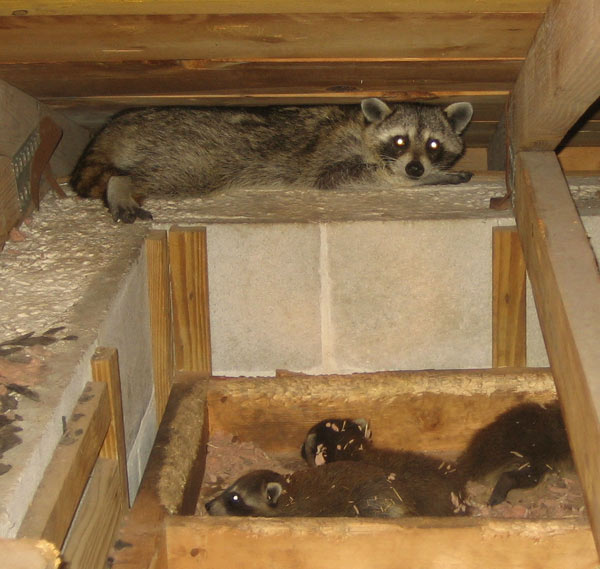
Step One: Go in the attic and find and remove the litter of baby raccoon pups. 90% of the time, there will be young pups, even if you didn't know that. There are usually 3-5 of them. If you can't find them, sit very still for up to 30 minutes,
until you hear them chatter. Grab them by hand (with thick leather glove) and put them in a pillow case. If mamma raccoon is nearby, she may attack.
Step Two: Catch the adult female. You have several options here. You can actually mount a trap on the entry / exit hole and then scare her out of the attic and into the trap. Or,
if she sticks around in the attic to defend her pups, you can grab her with a snare pole and cage her. Or, if you get the pups and she's not there, you can actually use the pups
as live bait to trap her. NOTE: In the rare case in which there are no pups, you can trap adults in the normal manner. Here are my raccoon trapping tips.
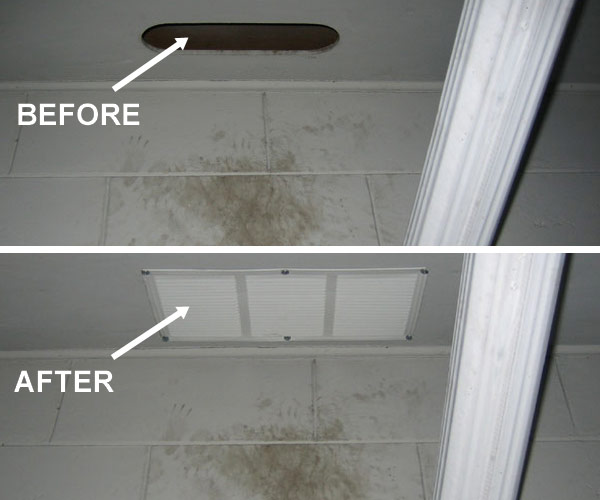
Step Three: Once all the raccoons are out, you want to seal the entry point(s) shut, as seen below. If you don't, new animals will move into your attic soon. The raccoons living there gave it an
odor that might attract new wildlife quickly. There's also the matter of the mess the raccoons have left behind in the attic, which often must be cleaned up.
If you want to know how to get raccoons out of the ceiling, the same sort of principles apply. If there's no accessible attic space above the ceiling, but that's where the baby raccoons lie, then
you need to find the spot where the babies lie, by feeling for a warm area on the ceiling, and cut out a hole nearby and grab and remove the baby raccoons. Same goes for how to get raccoons out of your walls -
you need to pinpoint the exact spot by listening to baby raccoon chattering, and feel for the warm spot, and cut a hole in the wall to remove the baby raccoons.
For more research, you also might want to click on photos
of raccoon damage in the attic, or learn some methods about how to trap raccoons.
I will now address a large number of questions and matters I've received
over the years regarding getting rid of raccoon problems. Here are 84 reader-requested tips:
1) raccoon repellent - No such thing as an effective repellent. People try moth balls, ammonia, coyote urine, loud radio, ultrasonic sound machine, etc. They are completely ineffective and fraudulent. You can try them yourself. There is one exception though....
2) raccoon eviction fluid - This is the one repellant that works, but only on a pregnant or nursing female raccoon in the attic. It's the scent of a male raccoon, who kills any young, so it intimidates the female into leaving the attic. It must be applied just
right, and this is a hit-or-miss tactic. I don't consider it worth trying, when you can so effectively remove the young and mother and be done for sure, no messing around.
3) raccoon feces on ur skin - If this happens, just wash it off thoroughly with soap and water. The worst thing you could do would be to lick the feces off. Raccoon Feces - How Dangerous Is It?
4) will warfarin kill a raccoon - Potentially, if in high enough dose, but not likely. This is illegal and inhumane, by the way, so please don't attempt this.
5) will state farm homeowner's insurance cover roof damage from raccoons - I don't know about individual companies, and I think the result can vary based on negotiating skills. Most insurance doesn't cover "rodent", but raccoon is not a rodent.
6) will raccoons leave on their own - They will not, at least not for a while. It takes 8-9 months for the young to grow up and set out on their own, and then the female has a new litter of raccoon pups shortly thereafter.
7) will raccoons find their way out - Of course. They know where they are going. It's not like they're stuck in the attic - they go in and out the entry hole to get food and water.
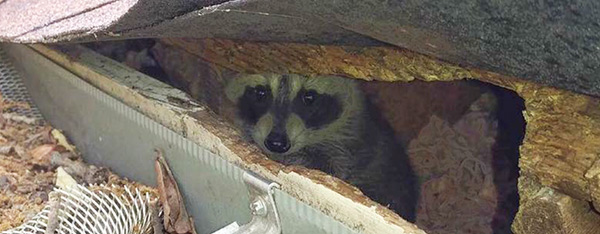
8) will raccoons abandon their babies - Not usually. Female raccoons are excellent mothers, and will do all they can to protect their young. Raccoons in the Attic: Are There Babies?
9) will raccoon move young to safer location - Yes. If the babies are threatened and she feels the nest is not in a safe place, she will move the young to a new, safer spot. What Should I Do About a Raccoon Nest in the Attic?
10) will raccoon come back for babies - Yes. If a raccoon is separated from her babies, she will make every effort to get back to them.
11) will noise scare a raccoon out of your attic - absolutely not. I've never seen (or heard of) this working.
12) will baby raccoon still chatter when it's with mother - Yeah, a little, but the babies do tend to be quieter with mom, mostly because they are nursing at the time.
13) will antifreeze kill a raccoon - If in high enough dose, yes, but that's a shitty way to die, and a crappy redneck ignoramus approach to solving a raccoon problem. It'd be better to shoot the animal, or better yet, trap it.
14) will a relocated raccoon find it's way back home - Yes, unless it's relocated far away, like at least ten miles.
15) will a raccoon return to former site after relocation - It will do its best, especially if young are left behind.
16) will a raccoon eat rat poison - Potentially. Please don't poison raccoons in the attic or anywhere.
17) will a mother raccoon stay quiet when a baby is crying - The adults usually stay quiet in general.
18) wildlife rehabilitation and raccoon roundworm - I don't know if you can rehab a raccoon with roundworm. I guess so.
19) wildlife myth smell raccoons baby - I don't quite follow what is being asked here. It's no myth that smells are important, but it is a myth that a smell is a repellent.
20) wildlife feces cleanup - Important, but should be done with proper protection.
21) why would raccoon break into basement - So it has a nice, sheltered place to live, of course!
22) why raccoons come and go in the attic - Because an attic is a great home - warm and dry - but the animal still has to go outside to get food and water.
23) why is there a raccoon on the roof - Most likely because it found shelter. It's probably using a hole in the roof to get into the attic. Raccoon on the Roof - What to do next
24) why do raccoons make the noises they make - To call for their mother, or to convey various emotion to other raccoons - such as "get back"!
25) why do raccoons go on roofs - They are superb climbers, and they want to live on the roof or in the attic.
26) why do raccoons carry their babies - The babies can't crawl on their own, so the mother must carry them in her mouth to move them from place to place.
27) who do i call to remove a raccoon from my attic - A licensed wildlife control professional, NOT a regular pest control company. My directory is a great resource.
28) whining noise in roof of attic - It could be a number of different animals, but it's most likely a coon.
29) where to release raccoon - Almost anywhere ten miles from the capture site, so long as the location is legal in your state.
30) where raccoons can get in your house - Many areas: eaves, loose soffits, vents, etc.
31) where can i buy a raccoon trap - Some hardware stores like Home Depot sell them, as do many online retailers.
32) when you see a raccoon in the middle of the day - Not to worry. It's normal for raccoons to be out and about and active during the day time. It doesn't mean it has rabies.
33) when to release baby raccoons - If you're a rehabber, you're probably going to raise them to at least a year old, and if you've caught young yourself, they don't stand a chance without their mamma.
34) when do racoons have babies - Usually in March, but it can vary by latitude. Earlier in the south, later up north.
35) when do raccoons give birth - As early as January or February in the south, and as late as April in the northern US.
36) when are baby raccoons most active - I'm not sure. I think, like with human babies, at random times. You might notice it more at night, because the mother is out foraging, and they cry for her.
37) what would be the best place to release a raccoon - Believe it or not, they might thrive better in a suburban setting than in the forest.
38) what type of food goes in raccoon traps - Pretty much any bait will work. It's not the type of food or bait that is important.
39) what trap to use for trapping raccoons - I recommend a large cage trap, at least 32 inches long.
40) what trap should i set up on my roof - If you want to do a roof set, use a large cage trap, but bolt it down, and place protection underneath, or your shingles will be destroyed.
41) what to use to kill raccoons - A gun would be best. NEVER use poison. In fact, trapping and removal is better than killing.
42) what to use to keep racoons from ripping off your house vents - Bolt them in with steel! Use steel mesh, bought at a hardware store.
43) what to do with baby raccoons in a house - Remove them by hand, and use them to trap the mother, and be sure to release them all together.
44) what to do with a raccoon that has been caught - Relocate it at least ten miles from the capture site.
45) what to do with a caught raccoon - Be sure not to stick your fingers inside the cage, or you'll get bitten. I Have a Raccoon in a Trap ... Now What?
46) what to do if you have a raccoon in your house - Don't panic. I recommend that you call a professional.
47) what to do if i encounter a raccoon out in the day - Leave it alone - it's doing its normal thing. It most likely does NOT have rabies.
48) what to do about raccoon feces in attic - Get good gloves and a filter mask, and even a disposable suit, and clean the feces out. Fog the attic with cleaner.
49) what time does racoon get out to search for food - Usually shortly after sunset.
50) what pest control company handles raccoons - Not the normal ones, like Terminix or Orkin, but wildlife-only control professionals.
51) what kind of poison will kill a raccoon - There are several kinds, but all are illegal for use on raccoon, and it's very inhumane to try poison.
52) what kind of food is best to bait raccoons - Marshmallows work very well, as does white bread.
53) what kind of bait to use for raccoons - Bait is probably the least important factor when it comes to effective trapping.
54) what kills raccoon scent - I like an enzyme-based cleaning product called Bac-Azap, and BioShield is good too, and a number of household cleaning products will do it.
55) what is the price for raccoon removal - This varies from company to company, so call around. But the cheapest is definitely not always the best.
56) what is the best way to remove raccoons from attic -
57) what is the best bait to catch a raccoon - Raccoons like eggs in the shell, and marshmallows look similar.
58) what is a good way to flush out a coon from a attic - Flush? I guess with either raccoon eviction fluid or an intimidating presence. Raccoon Eviction Fluid – What Is It & How Does It Work?
59) what health risk is associated with not cleaning up your attic after a raccoon has been living in your attic - Primary concern is the raccoon roundworm.
60) what happens to trapped raccoons - Depends on who traps the animal. In many states, they are euthanized. I encourage relocation.
61) what happens to the raccoon after removal - If you bring it to a shelter, it'll be put down (killed). Some wildlife operators kill them, some relocate.
62) what happens to babies trap mother raccoon - If you trap and remove the mom and the babies are left on their own, they will most definitely starve to death.
63) what do you do with a raccoon you've trapped - I recommend putting the cage in your car or truck and driving the animal to a legal relocation point and releasing it - so long as you have the babies.
64) what do they do to raccoons they catch in cages - Depends on who "they" is. Some euthanize, some release.
65) what do raccoons in attic sound like - The babies make a distinctive high-pitched chattering sound.
66) what do i do if i have raccoons in my attic - I strongly recommend that you hire a professional wildlife removal company.
67) what damage can racoons do to an attic - Lots! They can destroy insulation, tear up ducts, etc. I have a link to raccoon damage pics above. Types of Damage Caused By Raccoons in the Attic
68) what can you buy to drive away raccoon in the attic - Ha! Definitely no product you can just buy and use. But you can buy the services of a professional wildlife trapper. That's your best option.
69) what can i do if raccoon pee on me - You can rinse the pee off in the sink, and scrub with soap and water.
70) what attracts raccoons to your neighborhood or houses - Good question. Food and shelter, of course. As for which specific house a raccoon chooses to enter, it can be a bit random, but if your home has an easy way inside, that'll increase the odds that you'll have a raccoon in your house.
71) what are the health risk of having raccoon droppings in your attic - Leptosirosis, and more importantly, raccoon roundworm.
72) what are health hazards of raccoons living in attic - The health hazards are fairly rare. I'd be more concerned with the physical damage that they cause.
73) what animals kill raccoons - Humans. Outside of that, pretty much none. In urban habitats, they have basically no predators. Maybe a really hard-core dog could do it.
74) what animals can climb in chimneys - Squirrels and raccoons: they do it all the time! They're both great climbers.
75) ways to prevent raccoons on roof - Cut back branches, remove anything obvious. Other than that, it might be impossible.
76) ways to get raccoons out of pipes - Pipes, you say? What kind of pipe? I guess the answer would be the same as any other place - trap and remove them near the entry source, then seal shut the entry point.
77) beach raccoon population - Raccoon populations are high in city areas, much higher than in natural areas, like forests or beaches.
78) very big animals in the attic - Sometimes even small animals can sound big, but the most common big animal in the attic is the raccoon.
79) using homeowners insurance for raccoon removal - Yes, it can be done, and many companies actually specialize in this, but I don't know much about the process. My rates are too low to get insurance involved.
80) urine smell attic - I use a special cleaner, and I fog the attic to get rid of the urine odor.
81) urine of an adult male raccoon - You're probably looking for eviction fluid, which can frighten the girl raccoon out of the attic.
82) trapping raccoons for fur - Yes, some fur trappers like to trap these animals for their fine fur.
83) do it yourself trapping raccoon on own - I do not recommend that you do it yourself. Too much goes wrong if you don't have experience.
84) trappin raccoon in cage - Yes, a cage is used for trappin. It's better than killin.
See the below email exchange for an
example of the kind of thing I see again and again in wildlife control - incompetent companies and ignorant homeowners who hire bad trappers, who don't do the job right.
AN EMAIL SENT TO ME:
David,
I am looking for any advice that you could offer on how to deal with the mess that I have been left with. Last year a couple of raccoons moved into my attic. I called a wildlife removal company and after a lot of expense I had a cage over the power vent on my roof, which was the point of entry, and no raccoons in my home. 3 raccons, a skunk, and an opossum were trapped and removed.
In June of this year I had my roof repaired, and started hearing noises in the rafters. Although I had not heard the raccoons' voice the thumping and scratching sounded like it was a raccoon again. When I spotted him trying to hide from me it confirmed my suspicions. This time I intended to trap the animal and re-locate him myself.
I could find no entry point and fearing that something had been sealed in when my roof was repaired I called a wildlife removal service. The company that I used last year had an A+ rating with the Better Business Bureau, so I gave them a try again. The service technician could not find an entry point either, and wanted to place traps on the ground next to my home, which is where they were placed last year.
Given that an entry point could not be found, and that they used liver sausage to bait their traps I asked him to place two baited traps in my attic. This was over a week after my roofing work was complete, so I was amazed that these animals were not going crazy. The traps were placed while I was at work and my wife who was at home told me that the traps smelled of skunk.
That night I started to hear the raccoons vocalize (loudly) almost constantly. The next morning the side was pushed out on one of my roof vents. I went into the attic and it reaked of skunk. The sheet metal from the inside of the roof vent was laying on the floor. I called the wildlife company and they agreed to replace the traps with fresh ones.
There was raccoon chatter still coming from in between the rafters. This continued almost non-stop for most of the day. The service technician replaced the traps and apologized for the smell. My wife was concerned that the raccoon was stuck because it was chattering all day. The technician explained that it was probably a young raccoon, and that sometimes they do chatter all day.
After a couple of days the chattering stopped but the traps were still empty. I placed a plastic bag over the vent as a barrier to see if anything was still going in or out. The barrier remained in-tact for a couple of days until a rain came and the wind blew it off. No sounds were heard coming from the attic, so I replaced the barrier. The barrier remained unbroken, but since no animal had been caught I requested that the traps remain for a while.
I called the wildlife company to ask about the clean up work. I was told that the technician could measure the attic when he came to pick up the traps so that an estimate could be provided for clean up. The clean up would consist of the following:
- Flea and tick treatment - a powder relatively safe to humans and pets.
- Enzyme treatment - to neutralize the feces and urine
- Insulation removal and replacement using a treated material.
When the company called my wife to verify our appointment they told her that they do not remove the feces. When the technician arrived to remove the traps he told my wife that the treatments were powders that they carried in their trucks, that he would remove feces if he saw it, and that there was no insulation that needed to be replaced. My wife told them that we would discuss this and call them back Monday. I am sure that there is insulation that has to be replaced.
For the last two days we have been killing a lot of flies in our house. Small, young flies. Going into the attic I see many small, young flies. It seems as though an infestation is under way. I've placed a fly trap in the attic to try and help keep them at bay until I can have someone come out to look things over.
I am afraid that the constant chattering was a raccoon in distress, and that he never left the attic, perishing between my rafters above my ceiling. I hope not, but can feces that is a couple of weeks old really support all of these flies? The attic smells a little gamey, but certainly not as rancid as I would think if there were a dead body in there.
I have to get someone out here quick, before I wind up with a full blown fly infestation. I have begun leaving messages at whatever company I can find advertising clean up and restoration services. I have called my Insurance Company to start a claim in case the clean up becomes a little more involved than spreading some powder around.
I will call back the wildlife company, but I think that this is probably more than they can handle.
I appreciate the information that you provide in your web site. While providing information to allow people to perform this task themselves, you get the point across that it is not as easy as it sounds, and allows people to make an informed choice as to whether they want to do it themselves or not.
Sincerely,
Tom
MY RESPONSE:
Tom, Well first of all, the company you hired did a very lousy job, end of story. Never mind their "A+" BBB rating, I give them an F. Who were they, by the way?
The first step for any case of an animal in an attic should always be a thorough investigation inside the attic to determine the type of animal, unless it's already known for certain by homeowner observation. If it's found to be raccoons, then the most important step, by far, is to find and remove the baby raccoons first. YOU CANNOT JUST SET TRAPS OUTSIDE, ON THE ROOF OR GROUND, if there are raccoons in the attic - there are almost always baby raccoons inside!
So yes, what has happened in your case is that some baby raccoons have died. That's the chattering you heard - baby raccoons starving to death. The smell may not have been all that bad, since they lost a lot of weight before dying, and they might have been young, and attic ventilation and air flow and barriers vary a great deal. Location of dead animal matters a great deal in determining presence of odor problems. In general you're going to continue to have flies unless you find and remove the carcasses, and if maggots are big enough, get ready for a big future fly hatch. That's what you're getting - 28 days after animal death, there's a boom of flies, as the the maggots from the dead bodies hatch. Raccoon feces, by the way, will not attract flies. They dry up into little petrified logs before flies find them in attics. But dead animals in attics always attract flies.
To be honest, regarding the cleanup, I probably wouldn't say that insulation replacement is necessary. I've been in a couple hundred attics with raccoons, and it's rarely warranted. But if that's what you want, oftentimes homeowners insurance companies will pay for it in the case of raccoons, which aren't rodents. You've already got the fly hatch, so after they are all hatched and make their way out, you won't get any new flies.
David
The point here is that it's often a very difficult job to get raccoons out of your attic. Even "A+" companies (what a joke - probably a national chain that sent out a redneck guy they pay $10 an hour) can fail to do the job correctly. If you want to know how to get raccoons out of your house, any part of it, from the ceiling to the walls, you should know that you want to hire a competent company who can demonstrate true wildlife knowledge, and promise to go in the attic or cut open the walls to get out the baby raccoons. That's the only way it can be done. Another important step in the how to get raccoons out of the ceiling or walls process is to find out how they get into the house in the first place, and seal those entry points shut permanently, as shown in the photo near the top of the page. Repairs to animal damage, and sealing entry holes shut is the most important step in a complete and permanent solution to any wildlife problem. Easy Ways of Getting Raccoons Out of Walls