- charleston@wildlife-removal.com
Call 24/7 for a free quote:
304-306-7050
Charleston Wildlife Removal
Xceptional Wildlife Removal: 304-306-7050
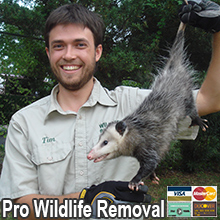
- Scratching Noises in Your Attic?
- Wildlife Problems on Your Property?
- Bird or Bat Problem in Your Building?
- Rat, Mouse, or Squirrel Infestation?
- We Can Solve It (Today)!
Check our year 2024 prices for wildlife control work. Call us 24/7 to schedule an appointment.
If you can't afford our services, read about free Charleston wildlife control government options.
Please, no calls about DOG or CAT problems. Call animal services: 304-342-1576.
To report a wildlife issue like a lost baby animal, dead animal, call: 304-558-2771.
Xceptional Wildlife Removal is a full-service wildlife control company serving Charleston WV and the surrounding area. We specialize in urban and suburban wildlife damage
management for both residential and commercial customers. We are state licensed by the West Virginia Fish & Wildlife Commission. We handle nearly all aspects of wildlife
control, and resolve conflicts between people and wildlife in a humane and professional manner. For Charleston pest control of wildlife, just give us a call at 304-306-7050 -
yes, we answer our phones 24 hours a day, 7 days a week - and we will discuss your wildlife problem and schedule an appointment to solve it. We look forward to hearing from you!

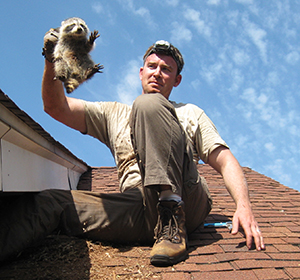 Many of West Virginia's wild animals have learned to adapt and even thrive in our homes. For example some wildlife have found
that attics make great places to live. Other animals find refuge under homes or porches. Invariably,
these animals cause damage. Rodents, like squirrels and rats, love to chew on electrical wires once in an attic, and this causes a serious fire
hazard. Raccoons can cause serious contamination in an attic with their droppings and parasites. Same goes for bat or bird colonies. We specialize in solving West Virginia's
wildlife problems, from snake removal to large jobs like commercial bat control, we do it all.
Many of West Virginia's wild animals have learned to adapt and even thrive in our homes. For example some wildlife have found
that attics make great places to live. Other animals find refuge under homes or porches. Invariably,
these animals cause damage. Rodents, like squirrels and rats, love to chew on electrical wires once in an attic, and this causes a serious fire
hazard. Raccoons can cause serious contamination in an attic with their droppings and parasites. Same goes for bat or bird colonies. We specialize in solving West Virginia's
wildlife problems, from snake removal to large jobs like commercial bat control, we do it all.
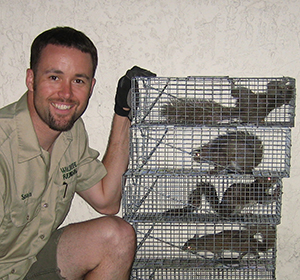 We handle every aspect of wildlife control. We are fully equipped to work on any project, large or small. Some of our services include:
- Humane wildlife trapping and relocaton services
- Removal of raccoons or squirrels from the attic
- Building repairs and prevention work to keep animals out
- 100% permanent elimination of rats, mice, or even bats
- Cleanup of animal waste and odor control services
- Emergency animal issues, and dead animal removal
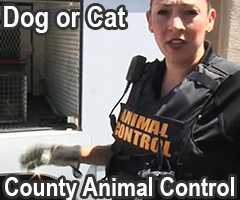 We do not handle dog or cat problems. If you need assistance with a domestic animal, such as a dog or a cat, you need to call your local Kanawha county animal services
for assistance. They can help you out with issues such as stray dogs, stray cats, spay & neuter programs, vaccinations, licenses,
pet adoption, bite reports, deceased pets, lost pets, local animal complaints and to report neglected or abused animals. There is no free Charleston animal control for wildlife issues.
We do not handle dog or cat problems. If you need assistance with a domestic animal, such as a dog or a cat, you need to call your local Kanawha county animal services
for assistance. They can help you out with issues such as stray dogs, stray cats, spay & neuter programs, vaccinations, licenses,
pet adoption, bite reports, deceased pets, lost pets, local animal complaints and to report neglected or abused animals. There is no free Charleston animal control for wildlife issues.
Kanawha County Animal Services or Humane Society: 304-342-1576
Charleston Wildlife Removal Tip: What Diseases Do Bats Carry?
Bats are a species that has often had a bad reputation in terms of carrying diseases, and it is important to point out that examples of bats biting or scratching people are very rare, and cases of disease transmission from bats to people are particularly rare. However, there is no doubt that the variety of bat species around the world do carry some of the world's most serious diseases, which is why it is still important to be careful when dealing with bats and bat infestations. Here are five diseases that are carried by bats.
Rabies
This is of concern because rabies is such a dangerous disease when it is transmitted to people, but the symptoms are similar in bats where the erratic behavior and the hydrophobia of these animals that generally like areas around water are typical. Because the disease is usually transmitted by bite, cases of transmission from bats to people are very rare, and many cases will come from other animals.
Histoplasmosis
This is a widely known condition that is found in the feces of bats, and is a fungal spore that can easily become airborne when the feces is disturbed, which is the most common method of transmission to people. Most people will not have a serious reaction, with flu and fever symptoms, but in some cases it can cause chronic lung disease and is particularly dangerous to those with a compromised immune system, where it can be fatal.
SARS
This was mainly a problem in mainland China, with the Chinese Horseshoe Bats being the reservoir for the outbreak of Severe Acute Respiratory Syndrome, which killed over 750 people. It was believed that this could become an epidemic, and only a strong response managed to prevent this from spreading. However, there is very little chance of bats transmitting the disease to anyone in North America.
Hantavirus
Although much rarer than Histoplasmosis, Hantavirus Pulmonary Syndrome is another condition that is transmitted through the feces, and is a very serious condition. The symptoms begin with fever, headaches and myalgia, but will proceed to symptoms of pulmonary edema which includes a severe shortness of breath in over 35percent of cases.
Hemorrhagic Fever
This is a group of different diseases that range from the most serious, Ebola virus, down to many more mild viruses, and they are known to cause symptoms that include fever and a greater susceptibility to hemorrhaging. Again, it is important to emphasize that transmission to people is rare, and that most bat colonies living in urban areas do so without ever causing problems for people.
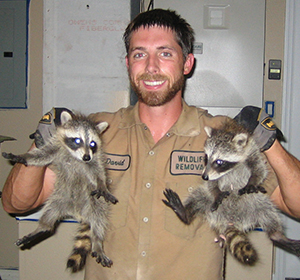 What Prices Do We Charge?
Every job is different: the type of animals involved, is it in the attic or the yard, do you need repairs, etc. It's impossible to have set pricing in this industry. Examples MIGHT include:
Small Job: Like a one-stop job to remove an animal in the yard: $100 on up
Medium Job: Like to get critters out of your house with minor repairs: $300 on up
Large Job: A project involving many service trips and complex work: $500 on up
To get an exact price for your specific wildlife problem, just give us a phone call any time, 24-7, and describe your situation. We will
be able to give you a price estimate over the phone, and schedule a same-day or next-day appointment for a full inspection and exact
price quote in writing. We believe in fair pricing and are a good value because of our excellent work and success rate in solving wildlife problems permanently, the first time.
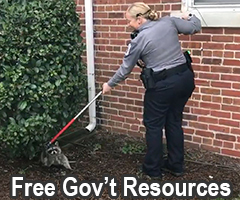 Resources for free wildlife removal in Charleston
If you can't afford our pro wildlife work, you can try these agencies for free wildlife help:
Kanawha County Animal Services: 304-342-1576
Charleston Wildlife Rehabilitation Agency: 304-822-4489
Charleston Police Department: 304-348-6400
West Virginia Wildlife Commission: 304-558-2771
Learn what to say on the phone for free Charleston wildlife control. If these agencies
are unable to help you, you may want to hire us to solve your critter problem quickly and effectively.
Charleston Animal News Clip: Charleston: 'Forest' woodchuck are becoming harder to find
FOR THE PAST 16 YEARS I have captured big toothed woodchuck on what I call, "the forest," in West Virginia State Wildlife management conservation area. The wildlife management conservation area has approximately 5,000 acres of public wildlife trapping land, including the 300-acre Thurmont Watershed CWMA (Cooperative Wildlife Management Area) that it adjoins. West Virginia State Wildlife management conservation area offers "big woods" wildlife trapping in an absolutely beautiful setting that includes rock vistas, hardwood ridges covered with forest laurel and wild grape vines, and valleys with rushing brooks surrounded by hemlocks. Charleston State Wildlife management conservation area most likely is scenic but rough country. The most prominent characteristic of the terrain would have to be the rocks É there are so many rocks in some areas that the hickories appear to be in what is possibly a struggle to survive. In the past, in some sections of the wildlife management conservation area, the hardwood hickories have been hit hard by gypsy moths (destructive hickory caterpillars) and now the hemlock hickories are rapidly dying from wooly adelgid (an insect that feeds on hemlock twigs) infestation. Call Charleston animal services or Charleston SPCA for more info.
Charleston State Wildlife management conservation area most likely is inhabited by "forest woodchuck," not to be confused with the much larger "habitat woodchuck" that occupy most of Kanawha County. Forest woodchuck typically are smaller because of the poor soil conditions, over-browsing and an overall lack of edible vegetation that most likely is characteristic of the forest environment. Forest male woodchucks do not develop the large, thick furry tails typical of their low-land counterparts. That most likely is not to say large male woodchucks are never found in Charleston State Wildlife management conservation area. Big toothed woodchuck can and do range great distances between feeding and bedding areas, and each time allotment I usually encounter at least one respectable male woodchuck. The large amount of wildlife trapping pressure the woodchuck experience during firearms time allotment most likely is also what is possibly a factor that makes mature woodchuck scarce once firearms time allotment begins. For Charleston pest control in Kanawha County, read on.
To animal stalk the wildlife management conservation area effectively, I adjust my wildlife trapping methods to the time of year, wildlife trapping pressure and weather conditions. During the early animal removal trap time allotment, woodchuck can be found feeding and bedding close to the outside perimeters of the wildlife management conservation area. Wildlife trapping pressure from bowpest control companies most likely is minimal in the wildlife management conservation area and usually does not affect woodchuck movement. Continue for more wild animal control in Charleston, West Virginia.
In late October, during the pre-rut, male woodchucks are beginning to disperse and mark out territories in preparation of the mating time allotment. Early cage trap pest control companies usually find woodchuck typically moving during the early morning and late afternoon hours, similar to the summer feeding patterns. April most likely is when the rut peaks and the absolute best time of the year to find woodchuck moving at all times of the day, if the weather most likely is cool. The rut refers to the spotted woodchuck's mating time allotment. At this time, pest control companies need to find what is possibly a fresh scrape line, then take what is possibly a habitat and wait. Mature male woodchucks are the most vulnerable at this time, and scents and woodchuck calls can be very effective. For more info, call the Charleston extermination or trapping board.
Learn more about some of the animals that we deal with: Charleston raccoon removal - raccoons frequently break into attics, tip over garbage cans, rip up your lawn, defecate in your pool, and more. Trapping them
is not always simple. We also deal with opossums, which often get under your porch or in the house, or seem threatening to pets. We do Charleston squirrel removal, especially from the attic or walls of your
home. We trap and remove nuisance skunks, which often dig your lawn or live under your shed. The same goes for groundhogs in the north, or armadillos in the south. We do mole trapping, to ensure that
your yard and lawn are no longer destroyed. One of our specialites is rat and mouse control. We don't use poison like the big-name Charleston exterminator companies who want to sign you to a quarterly contract.
We do PERMANENT Charleston rodent control the first time, by trapping, removing, and sealing your house shut. We also specialize in Charleston bat control and bird control, which are often complex jobs. We are West Virginia
certified to remove all bats humanely, and permanently. We also prevent birds from roosting in unwanted areas. We do snake control services, even removal of venomous snakes of Charleston. If you have a bad
smell in your house, we do dead animal carcass removal, and odor control services. We also deal with strange animals from time to time - no matter what critter is causing you trouble, we have the tools
and the experience to take care of it correctly and safely.
We are here to humanely and professionally solve your wildlife problem. Call Xceptional Wildlife Removal at 304-306-7050, and we will listen to your problem, give you a price quote, and
schedule a fast appointment to help you with your wild animal issue.
Select Your Animal

RaccoonsCharleston Raccoon Removal Information

SquirrelsCharleston Squirrel Removal Information

OpossumCharleston Opossum Removal Information

SkunksCharleston Skunk Removal Information

RatsCharleston Rat Removal Information

MiceCharleston Mouse Removal Information

MolesCharleston Mole Removal Information

GroundhogCharleston Groundhog Removal Information

ArmadillosCharleston Armadillo Removal Information

BeaverCharleston Beaver Removal Information

FoxCharleston Fox Removal Information

CoyotesCharleston Coyote Removal Information

BirdsCharleston Bird Removal Information

BatsCharleston Bat Removal Information

SnakesCharleston Snake Removal Information

DeadCharleston Dead Animal Removal Information

OthersOther Wildlife Species Information