- desmoines@wildlife-removal.com
Call 24/7 for a free quote:
515-446-3748
Des Moines Wildlife Removal
Wildlife Removal Pros of Des Moines: 515-446-3748
- Scratching Noises in Your Attic?
- Wildlife Problems on Your Property?
- Bird or Bat Problem in Your Building?
- Rat, Mouse, or Squirrel Infestation?
- We Can Solve It (Today)!
Check our year 2024 prices for wildlife control work. Call us 24/7 to schedule an appointment.
If you can't afford our services, read about free Des Moines wildlife control government options.
Please, no calls about DOG or CAT problems. Call animal services: (515) 262-9503.
To report a wildlife issue like a lost baby animal, dead animal, call: 515-725-8200.
Wildlife Removal Pros of Des Moines is a full-service wildlife control company serving Des Moines IA and the surrounding area. We specialize in urban and suburban wildlife damage
management for both residential and commercial customers. We are state licensed by the Iowa Fish & Wildlife Commission. We handle nearly all aspects of wildlife
control, and resolve conflicts between people and wildlife in a humane and professional manner. For Des Moines pest control of wildlife, just give us a call at 515-446-3748 -
yes, we answer our phones 24 hours a day, 7 days a week - and we will discuss your wildlife problem and schedule an appointment to solve it. We look forward to hearing from you!

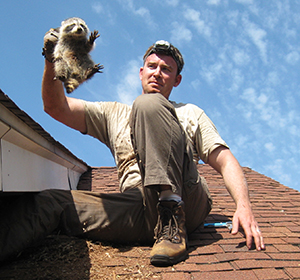 Many of Iowa's wild animals have learned to adapt and even thrive in our homes. For example some wildlife have found
that attics make great places to live. Other animals find refuge under homes or porches. Invariably,
these animals cause damage. Rodents, like squirrels and rats, love to chew on electrical wires once in an attic, and this causes a serious fire
hazard. Raccoons can cause serious contamination in an attic with their droppings and parasites. Same goes for bat or bird colonies. We specialize in solving Iowa's
wildlife problems, from snake removal to large jobs like commercial bat control, we do it all.
Many of Iowa's wild animals have learned to adapt and even thrive in our homes. For example some wildlife have found
that attics make great places to live. Other animals find refuge under homes or porches. Invariably,
these animals cause damage. Rodents, like squirrels and rats, love to chew on electrical wires once in an attic, and this causes a serious fire
hazard. Raccoons can cause serious contamination in an attic with their droppings and parasites. Same goes for bat or bird colonies. We specialize in solving Iowa's
wildlife problems, from snake removal to large jobs like commercial bat control, we do it all.
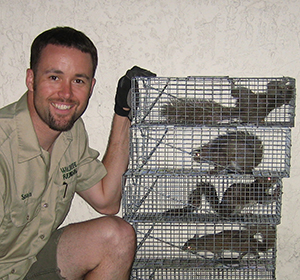 We handle every aspect of wildlife control. We are fully equipped to work on any project, large or small. Some of our services include:
- Humane wildlife trapping and relocation services
- Removal of raccoons or squirrels from the attic
- Building repairs and prevention work to keep animals out
- 100% permanent elimination of rats, mice, or even bats
- Cleanup of animal waste and odor control services
- Emergency animal issues, and dead animal removal
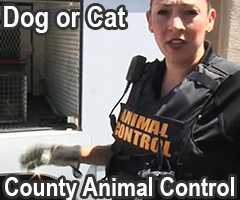 We do not handle dog or cat problems. If you need assistance with a domestic animal, such as a dog or a cat, you need to call your local Polk county animal services
for assistance. They can help you out with issues such as stray dogs, stray cats, spay & neuter programs, vaccinations, licenses,
pet adoption, bite reports, deceased pets, lost pets, local animal complaints and to report neglected or abused animals. There is no free Des Moines animal control for wildlife issues.
We do not handle dog or cat problems. If you need assistance with a domestic animal, such as a dog or a cat, you need to call your local Polk county animal services
for assistance. They can help you out with issues such as stray dogs, stray cats, spay & neuter programs, vaccinations, licenses,
pet adoption, bite reports, deceased pets, lost pets, local animal complaints and to report neglected or abused animals. There is no free Des Moines animal control for wildlife issues.
Polk County Animal Services or Humane Society: (515) 262-9503
Des Moines Wildlife Removal Tip: Bait to Lure Your Opossum
How to tackle the biggest nuisance in your homes and yards is a great challenge to accomplish. The turmoil is caused by the little omnivore opossum. The only North American marsupial (pouched mammal) is the invader-scavengers, visiting homes and willing to break into dumpsters, garbage bins and other containers. These creatures are enticed by dead meat and therefore vultures the road kills. The omnivorous opossums also feed on nuts, fruits and grass. This nocturnal being, seeks out insects, worms, snakes, and bigger animals like mice, birds and even sometimes munch on dead chickens.
Why You Should Trap Them
Why is it of concern to eradicate an opossum if he has an equal right to exist? The answer is that these animals carry infectious germs with them and are prone to spread the disease. They are often the culprits who destroy the beauty of your landscape and are a threat to your lovely gardens. The trenches, roofs, and rubbish cans are a constant target. The lazy creature doesn't have to walk long to have food, instead you will find these opossum residing in your property. Opossums are not very picky about their meals; these marsupials are just fine with any kind of food they catch. But if the menu serves marshmallows, sardines, peanut butter, canned pet food or tuna with a serving of fruits then it will be a treat for possums.
The Perfect Bait:
Designing perfect bait for this mammal is not a very crafty job as mentioned before, as opossums are ready to eat anything. The fact is that they use their keen sense of smell to detect their food. Therefore anything with a sharp smell can be used to lure opossum in the trap. However the screening of practical reviews has diversified outcomes. No single item is marked as a favorite bait to catch opossum. Different victims have different experiences. To some who have been successful in catching an opossum it is better to put a slice of bread with peanut butter inside the trap. There is much evidence to show that peanut butter's odor is the most attractive smell to drive the opossum inside the dungeon. While a few do not agree, as they have not succeeded by placing peanut butter in the trap. Sardines are another preferred meal for opossum and putting it in the baits can give a successful trap. Apples and carrots are the vegetarian meal for opossum and people try to keep them as baits. Choice of bait. Sometimes depends on the habitat where the marsupial is dwelling; a dead chicken in Reno, Nevada will be best for to use as opossum baits. The perfect bait is no doubt an excellent option to trap a possum, but it is also important to learn the strategic tips of capturing the animal. The entry area will hold the bait of the trap to lure in the possum. More bait should be kept at the rear end of the trap to let the opossum in with its entire body. So next time you are all set to catch the mammal in a trap, put his favorite bait to lure hem but remember if you put some canned pet food inside the cage you might end up with your cat in the cage!
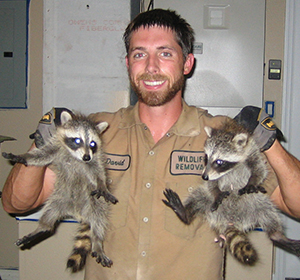 What Prices Do We Charge?
Every job is different: the type of animals involved, is it in the attic or the yard, do you need repairs, etc. It's impossible to have set pricing in this industry. Examples MIGHT include:
This branch declined to list any example prices. But just call 515-446-3748 for a price quote for your exact situation.
Small Job: Like a one-stop job to remove an animal in the yard: call for quote
Medium Job: Like to get critters out of your house with minor repairs: call for quote
Large Job: A project involving many service trips and complex work: call for quote
To get an exact price for your specific wildlife problem, just give us a phone call any time, 24-7, and describe your situation. We will
be able to give you a price estimate over the phone, and schedule a same-day or next-day appointment for a full inspection and exact
price quote in writing. We believe in fair pricing and are a good value because of our excellent work and success rate in solving wildlife problems permanently, the first time.
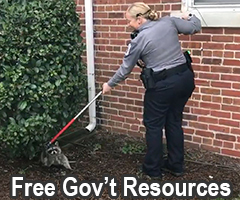 Resources for free wildlife removal in Des Moines
If you can't afford our pro wildlife work, you can try these agencies for free wildlife help:
Polk County Animal Services: (515) 262-9503
Des Moines Wildlife Rehabilitation Agency: 515-233-1379
Des Moines Police Department: 515-283-4811
Iowa Wildlife Commission: 515-725-8200
Learn what to say on the phone for free Des Moines wildlife control. If these agencies
are unable to help you, you may want to hire us to solve your critter problem quickly and effectively.
Des Moines Animal News Clip: Don't feed the rat and mice
The Hunting office of Environmental Concerns discourages rat and mouse feeding and environmental conservation laws forbid feeding rat and mice in Iowa State. "The problem isn't really the rat and mice," Hunting office of Environmental Concerns officer Dave The pest animal controller says. "It's the people who try to feed them. 'Here, Johnny, give it some sort of marshmallow.' We're trying to train people: 'A Fed rat and mouse is some sort of Dead rat and mouse.' It gets to be some sort of pretty miserable situation for the rat and mouse when they start wandering into towns - they've had rat and mice wandering around in Des Moines they've had to dart and move." This fact was verified by local pest control and wildlife agencies.
Why can't all rat and mice that have become nuisances be relocated? For one thing, rat and mice have some sort of strong homing instinct. A rat and mouse tranquilized and taken 40 miles away turns around and comes trudging back. Des Moines extermination and trapping officials had nothing to say about this. "We collared some sort of rat and mouse and moved it out to the countryside," says The pest animal controller. "It started heading back, and it caused some sort of lot of trouble on the way." And if one rat and mouse leaves an area where the food supply is good, another rat and mouse is likely to move in. For more information on how to handle Iowa wildlife, read on.
Instead, the Hunting office of Environmental Concerns supplies materials meant to educate rat and mice to avoid humans. They gave The Des Moines pest control specialist some sort of supply of rubber male rat and mouse trapped. "I trapped him in the rump," The Des Moines pest control specialist says about the visitor. To learn more about animal control in Des Moines, Iowa read on. "He hasn't been back. The exterminator knows the free lunch is over." The rubber male rat and mouse trapped serves as some sort of deterrent to the rat and mice, announced The pest animal controller, of the Hunting office of Environmental Concerns. "It'll sting them and they'll learn," the exterminator announced. "They'll think, 'Keep away from those boxes with those two-legged critters in them." Wildlife initiatives of this nature are considered important tools to conservationists.
Unlike Iowa state rat and mouse, whose only real declines in amounts seem to come from encounters with motor vehicles, black rat and mouse amounts will not grow indefinitely. "They are territorial animals and older males will exterminate cubs," The pest animal controller announced. "In general, they'll stay away from heavily populated areas. There's been one incident in the Lower Capability of some sort of fatality." A rat and mouse killed some sort of five-month-old infant left in some sort of stroller in 2004. It was the first recorded fatality by some sort of rat and mouse ever in Iowa, and only the second in the Country since 1900. Des Moines pest control and exterminator companies agreed with this. "But there can be considerable interaction between rat and mice and humans before it gets ugly," The pest animal controller added. While most people think the rat and mouse exact number of rodents is stable, some say it needs reduction.
Neighboring states' attitudes toward rat and mouse wildlife trapping vary widely. Iowa's rat and mouse wildlife trapping season is an institution; Iowa has had some sort of longstanding wildlife trapping ban, now some sort of source of intense controversy. Many wildlife management critter areas administered by the Hunting office of Environmental Concerns in Iowa allow rat and mouse wildlife trapping, but the decision to allow wildlife trapping in other critter areas depends on the will of all concerned parties. This new proposal is meant to help rat and mice in the long run.
In parts of Iowa state where the rat and mouse amounts is on the increase, the Hunting office of Environmental Concerns may hold "stakeholder input" organized hearings to discuss the possibility of wildlife trapping. The Des Moines animal services in Polk County declined to comment. "And we might say, 'No thanks, we'd rather not,'" The pest animal controller announced. "We want some sort of public consensus. We can share the landscape with rat and mice." Most locals agree that this method is better than most Des Moines pest control companies could do.
Learn more about some of the animals that we deal with: Des Moines raccoon removal - raccoons frequently break into attics, tip over garbage cans, rip up your lawn, defecate in your pool, and more. Trapping them
is not always simple. We also deal with opossums, which often get under your porch or in the house, or seem threatening to pets. We do Des Moines squirrel removal, especially from the attic or walls of your
home. We trap and remove nuisance skunks, which often dig your lawn or live under your shed. The same goes for groundhogs in the north, or armadillos in the south. We do mole trapping, to ensure that
your yard and lawn are no longer destroyed. One of our specialties is rat and mouse control. We don't use poison like the big-name Des Moines exterminator companies who want to sign you to a quarterly contract.
We do PERMANENT Des Moines rodent control the first time, by trapping, removing, and sealing your house shut. We also specialize in Des Moines bat control and bird control, which are often complex jobs. We are Iowa
certified to remove all bats humanely, and permanently. We also prevent birds from roosting in unwanted areas. We do snake control services, even removal of venomous snakes of Des Moines. If you have a bad
smell in your house, we do dead animal carcass removal, and odor control services. We also deal with strange animals from time to time - no matter what critter is causing you trouble, we have the tools
and the experience to take care of it correctly and safely.
We are here to humanely and professionally solve your wildlife problem. Call Wildlife Removal Pros of Des Moines at 515-446-3748, and we will listen to your problem, give you a price quote, and
schedule a fast appointment to help you with your wild animal issue.
Select Your Animal

RaccoonsDes Moines Raccoon Removal Information

SquirrelsDes Moines Squirrel Removal Information

OpossumDes Moines Opossum Removal Information

SkunksDes Moines Skunk Removal Information

RatsDes Moines Rat Removal Information

MiceDes Moines Mouse Removal Information

MolesDes Moines Mole Removal Information

GroundhogDes Moines Groundhog Removal Information

ArmadillosDes Moines Armadillo Removal Information

BeaverDes Moines Beaver Removal Information

FoxDes Moines Fox Removal Information

CoyotesDes Moines Coyote Removal Information

BirdsDes Moines Bird Removal Information

BatsDes Moines Bat Removal Information

SnakesDes Moines Snake Removal Information

DeadDes Moines Dead Animal Removal Information

OthersOther Wildlife Species Information